Box Jam! - 3D puzzle
- 4.7
- Rating
- 1.00M
- Installs
- Free
- Price

 Analysis by App-foxy
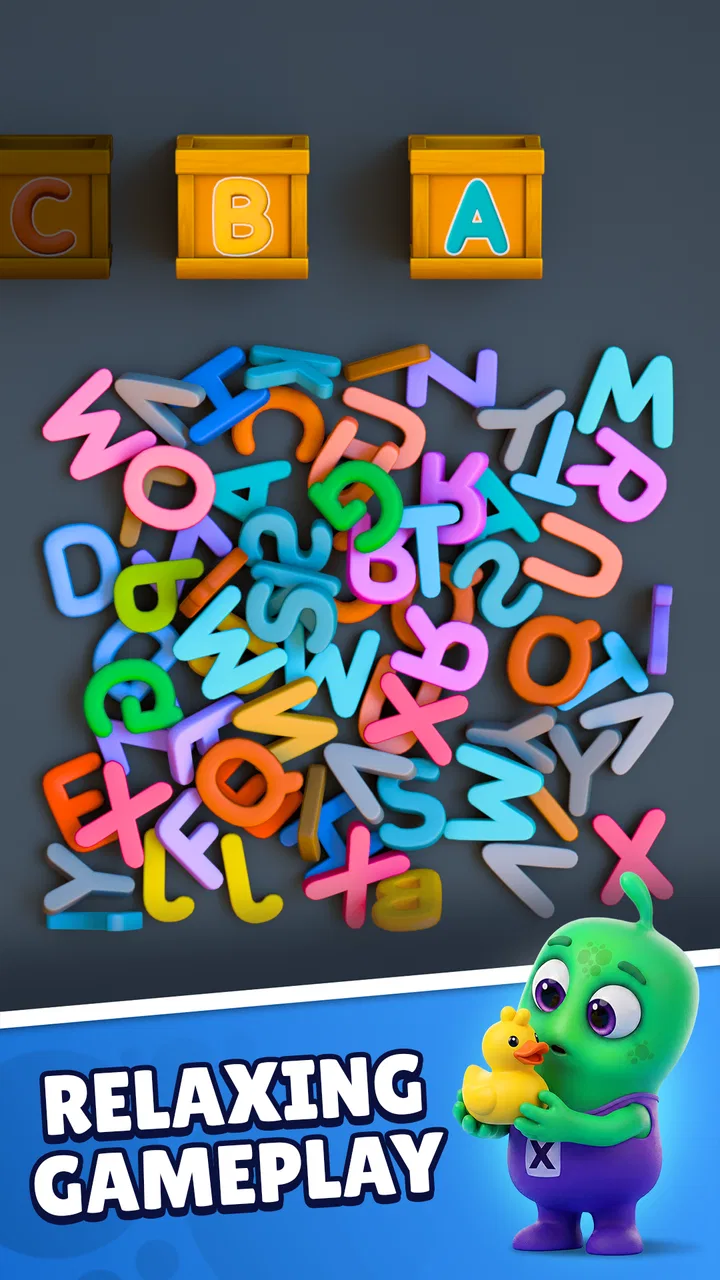
I approached Box Jam! - 3D puzzle as the kind of casual game you open when you want something easy to understand but still engaging enough to hold your attention. Its central task is simple: arrange three-dimensional objects into matching boxes and clear the board. That sounds modest, yet the spatial view gives the familiar sorting idea more presence than a flat matching game. I found myself paying attention not only to color and shape, but also to the way objects were positioned and how much room remained on the board.
That makes it a useful choice for short breaks, quiet evenings, or those moments when I want a game without a long tutorial or a complicated story. It is free to start, rated for Everyone, and made by Playoneer Games, Ltd. The game has reached over a million installs and holds a 4.8 average from around twelve thousand ratings, so it has clearly found an audience among players looking for approachable puzzle entertainment. Those numbers do not replace personal experience, but they do suggest that its basic idea is easy for many people to pick up.
What I considered before recommending it
When I decide whether a casual puzzle game deserves space on my phone, I look beyond whether the first few minutes feel pleasant. I want to know how quickly the rules become clear, whether the board encourages thoughtful play rather than random tapping, and whether the game works for both a quick pause and a longer session. I also consider how much pressure the game creates around mistakes, because a relaxing puzzle stops feeling relaxing when every move seems designed to make the player worry about running out of something.
You May Also Like

 Blood Strike: 2.5 Anniversary
Blood Strike’s Loadouts Turn Every Drop Into a Tactical Gamble
A close look at Blood Strike’s custom loadouts: how fast access to signature weapons reshapes its battle royale rhythm, rewards preparation, and narrows the gap between fights.

 Pandora - Music & Podcasts
Pandora’s Music Is Easy to Start, but Harder to Recover
Pandora’s strength is its low-effort path from a seed to a station. Its weak spot is how much confidence it asks you to place in connection, setup, and quiet recovery.

 8 Ball Pool
 Is Built on Rivalries, Rematches, and Routine
A close look at the rivalries, rematches, shared routines, and unanswered safety questions that turn a quick pool match into a persistent mobile community.

 Samsung Music
’s Quiet Strength Is Playing What You Already Own
Its reach comes less from spectacle than from dependable access to a personal library. That simplicity is both the app’s strongest retention engine and its ceiling.

 AccuWeather: Weather Radar
AccuWeather Review: A Quick, Clear Forecast for Everyday Decisions
For everyday plans, the best forecast is the one you can understand quickly. AccuWeather makes rain timing, radar, and local conditions easy to act on, with a few trade-offs.

 Hill Climb Racing
Why Hill Climb Racing Still Turns Crashes Into One More Run
A tiny car, a bumpy hill and one more upgrade: Hill Climb Racing keeps resurfacing because its simple chaos makes every near-miss feel personal.
More From Our News Desk
View All News


Box Jam! performs well on the first test. The objective is immediately understandable: identify suitable objects, place them into boxes, and work toward clearing the board. I did not need a long explanation to understand what I was supposed to do. That accessibility matters for a family-friendly game, especially one intended for players who may not normally choose complex puzzle titles.
The 3D presentation is the more important decision point. A two-dimensional sorting game can often be scanned in one glance, while a three-dimensional arrangement asks me to inspect the board from a slightly more spatial point of view. This creates a small but meaningful layer of planning. Before making a move, I naturally check which items are visible, which choices may become easier after clearing space, and whether I am committing a useful position too early.
My advice is to judge the game by the type of concentration you want. If you enjoy calm visual organization, it has a strong starting point. If you want deep strategy, a campaign with elaborate systems, or a puzzle that demands lengthy deduction, its straightforward format may feel too light. It is best understood as a compact sorting challenge with a 3D identity, not as a replacement for a full-scale logic game.
The first sessions: simple rules, useful spatial awareness
In my first sessions, the strongest part was the low barrier to entry. I could begin making progress without learning a vocabulary of special moves. The board communicates the main task through objects and containers, so the challenge comes from deciding what to move and when rather than remembering complicated controls. That makes it suitable for playing while waiting for an appointment or taking a short break between other tasks.
One practical habit improved my play noticeably: I stopped treating the first available match as automatically correct. Instead, I looked at the whole visible arrangement before committing. Clearing one area can make another group easier to read, while a careless placement can leave the remaining objects feeling more crowded. This is not a dramatic strategic system, but it gives the game more thoughtfulness than simple item collecting.
I also found that the 3D layout changes how I use my attention. I scan by groups first, then compare individual pieces. That is more efficient than examining every object in isolation. Players who enjoy organizing shelves, arranging colors, or spotting patterns may appreciate this rhythm. It feels closer to tidying a small visual space than solving a traditional written puzzle.
For younger players, the Everyone rating makes the game approachable in principle, and the rules are easy to explain. Adults may enjoy it for the same reason: there is very little preparation between opening the game and making the first decision. Still, an adult who wants a demanding brain-training routine should keep expectations realistic. The appeal here is gentle focus, not an academic exercise.
Where the game is most convincing
The clearest strength is the combination of familiarity and presentation. Sorting objects into boxes is an idea most players can understand immediately, but the three-dimensional board gives each decision a little more visual weight. I am not simply matching symbols on a grid; I am reading a small arrangement and deciding how to make it orderly. That difference is enough to make the game feel distinct from a basic color-matching title.
It also wins on flexibility. I can play a short round when I have only a few minutes, yet the same basic loop remains comfortable when I want to continue. This is valuable for people who do not want a game that demands a fixed daily commitment. There is no need to remember a complicated storyline or reconstruct a large strategy after putting the phone down.
Another advantage is its broad audience. The casual category is often strongest when the rules are welcoming without making the experience completely empty. Box Jam! reaches that balance better than many ultra-simple tap games because the board asks me to observe before acting. Someone new to mobile puzzles can start comfortably, while a regular casual player can still develop a more careful scanning routine.
The game is especially well suited to a realistic everyday situation: I might open it on public transport, play a few boards while waiting, then close it without feeling that I have abandoned a larger task. In the evening, it can also work as a low-intensity alternative to competitive games. I do not need to be in a high-energy mood to enjoy arranging the board.
Small techniques that make the experience better
The first useful technique is to create a visual priority order. I look for groups that are already close to completion, then check whether finishing them will expose or simplify nearby objects. This prevents me from scattering attention across the entire board. It also reduces the temptation to make moves only because they are immediately available.
The second is to pause after a successful placement. It is easy to continue tapping quickly because the action feels satisfying, but the board may look different once an object disappears or a space opens. Taking a moment to reassess helps me avoid carrying an outdated plan into the next move. This is a small habit, yet it makes the game feel more deliberate.
The third is to use the 3D view as information rather than decoration. I try to compare depth, position, and visibility before deciding which object deserves attention. Even when the rule remains simple, this approach makes the board easier to read and gives the player a reason to slow down. That is one of the game’s less obvious strengths: it rewards visual organization without requiring complicated instructions.
A fourth consideration is session length. If I play continuously for too long, the sorting pattern can become repetitive. I get more enjoyment by treating it as a series of short concentration exercises rather than expecting every session to feel fresh for an extended period. That is not a defect for a casual game, but it is an important way to use it well.
How it compares with familiar alternatives
Compared with match-three games, Box Jam! feels less focused on chain reactions and more focused on arranging a space. A match-three player usually watches for combinations and cascading outcomes, while here I spend more time identifying objects and deciding how to clear the board in an orderly way. If you enjoy colorful bursts and fast consecutive moves, a traditional match-three game may provide more excitement. If you prefer a calmer visual task, this title is the better fit.
Compared with hidden-object games, it offers a more active conclusion to each observation. Finding an item is only the beginning; I still need to place it appropriately and think about what that move does to the remaining board. Players who like searching but want a clearer organizing action may find this more satisfying than simply tapping objects in a scene.
Compared with word puzzles, the game replaces language with shape, position, and visual grouping. That makes it accessible when I do not want to concentrate on spelling or clues. On the other hand, people who enjoy building vocabulary or solving layered definitions will find more depth in a word-based alternative. The right choice depends on whether your preferred mental activity is visual arrangement or verbal deduction.
Compared with minimalist sorting games, the 3D perspective is the main reason to choose this one. A flat interface may be faster to read and less visually demanding, but it can also feel more mechanical. Box Jam! asks for a little more spatial inspection, which gives ordinary sorting a stronger sense of place. The trade-off is that players who want instant clarity may prefer a simpler two-dimensional board.
Where another type of game may fit better
I would not recommend this as the primary game for someone who wants a rich progression system, competitive ranking, narrative discovery, or demanding multi-step logic. Its appeal comes from the immediate board-level task. If your ideal mobile game is one you study for weeks and master through complex techniques, you may outgrow this format.
It may also be a poor match if you dislike visual repetition. The core pleasure comes from repeating the same broad activity with different arrangements: inspect, sort, place, and clear. That loop is comfortable, but it is intentionally focused. Players who need constant changes in mechanics may prefer a puzzle collection with several unrelated modes.
Another trade-off concerns attention. The 3D layout can make the game more interesting, but it also means I need to look carefully rather than relying on a quick glance. Someone who wants a puzzle that can be played almost automatically while watching television may find the spatial element mildly inconvenient. For me, that extra attention is a benefit, but it will not suit everyone.
Free access, purchases, and the cost of changing habits
The game is free, which makes trying it straightforward. The listed in-app purchases range from $1.99 to $99.99 per item, so I would approach optional spending thoughtfully rather than assuming that every purchase is necessary. I prefer to play first, understand how comfortable the normal loop feels, and only then decide whether any paid option genuinely improves my experience.
This is also where the cost of switching matters. Moving from another casual puzzle game to Box Jam! is easy because the central skill transfers: observe the board, recognize patterns, and plan a useful move. There is no large story or complicated system that I need to catch up on. The real switching cost is preference. If I am used to fast matches, dramatic effects, or a wide variety of modes, I may need to accept a quieter pace.
On the practical side, the current version is 1.0.83 and requires Android 9 or later. That makes the compatibility question simple for most relatively recent Android devices, while owners of older phones should check their operating system before expecting to install it. The developer is Playoneer Games, Ltd., and the game was released on February 18, 2025, so it presents itself as a relatively recent casual option rather than a long-established classic.
The age rating of Everyone broadens its appeal, but parents should still decide whether the game’s purchase options suit their household. I would keep purchase controls protected on a shared device, especially when children can access a game that is otherwise easy to open and play. That is sensible device management rather than a criticism of the sorting concept.
Who should download it, and who should skip it
I recommend Box Jam! to players who want a friendly visual puzzle that can fit around daily life. It is a good candidate for short waiting periods, relaxed evening play, and anyone who enjoys turning a cluttered arrangement into an orderly one. It is also a sensible first step for someone who finds traditional logic games intimidating but still wants more involvement than a purely automatic idle app.
I would be more selective with players who need constant novelty or deep strategic escalation. If you want a game that rewards elaborate planning across many systems, this probably should not be your main choice. Likewise, if you prefer wordplay, story-driven puzzles, or competitive pressure, another category will serve you better.
For families, the accessible rules and Everyone rating are appealing, but I would still watch how different players respond to the repetition. Some children may enjoy the visual organization immediately, while others may want faster action. The same applies to adults: the game is relaxing for me when I want a focused break, but it is not a universal substitute for every kind of casual entertainment.
My recommendation after using it
Box Jam! succeeds because it does not overcomplicate its central idea. It takes the familiar satisfaction of sorting and adds enough 3D awareness to make each board worth examining. I like that I can understand the objective quickly, develop better habits through observation, and stop after a short session without losing the thread.
Its limitations are equally clear. The loop is focused, so players seeking major variety or a demanding long-term challenge may find it narrow. The optional purchase range also means I would play comfortably within my own spending limits instead of assuming that free access tells the whole story. Those points do not undermine the game; they simply define the audience it serves best.
My final advice is straightforward: try it if you want a calm, visual sorting game with a little spatial thinking. Give it a pass if your priority is competition, narrative, or complex logic. For the right player, the best reason to choose it is the balance between instant accessibility and just enough board awareness to make each move feel considered. I would recommend it as a light, practical puzzle companion rather than as an all-purpose mobile game.
FAQs for Box Jam! - 3D puzzle
01What is Box Jam! - 3D Puzzle?
Box Jam! - 3D Puzzle is an engaging mobile puzzle game available on Android and iOS. It challenges players to solve intricate 3D puzzles by strategically moving boxes to reach a goal. The game is designed to test your spatial reasoning and problem-solving skills through a variety of mind-bending levels.
02Is Box Jam! - 3D Puzzle free to play?
Yes, Box Jam! - 3D Puzzle is free to download and play. However, it includes in-app purchases for additional features, such as hints and level unlocks. These purchases are optional, allowing players to enjoy the core experience without spending money, though they can enhance gameplay for those who choose to invest.
03What are the system requirements for Box Jam! - 3D Puzzle?
Box Jam! - 3D Puzzle requires an Android device running version 5.0 or higher, or an iOS device with iOS 11.0 or later. The game is optimized for both smartphones and tablets, ensuring a smooth and enjoyable experience across different screen sizes and device capabilities.
04Does Box Jam! - 3D Puzzle offer offline play?
Yes, Box Jam! - 3D Puzzle can be played offline, making it a great option for players who want to enjoy the game without an internet connection. This feature allows you to solve puzzles anywhere, anytime, without needing to worry about data usage or connectivity issues.
05Are there any social features in Box Jam! - 3D Puzzle?
Box Jam! - 3D Puzzle includes social features that allow players to connect with friends. You can share your progress, compete on leaderboards, and even challenge friends to beat your scores. This adds a social element to the game, making it more interactive and competitive.
Pros
- Engaging 3D graphics enhance gameplay.
- Offers a variety of challenging levels.
- Intuitive controls are easy to master.
- Minimal ads for a smoother experience.
- Regular updates add new puzzles.
Cons
- Some levels may feel repetitive.
- Occasional in-app purchase prompts.
- Limited hints can slow progress.
- Requires internet for some features.
- No multiplayer mode available.

Box Jam! - 3D puzzle
Gallery